

Psilocybin preparation and integration therapy
A psilocybin experience is only the beginning.
$175 per session. No fixed package. Free 20-minute consultation.
You may have been thinking about psilocybin for a while.
You’ve read some of the research. Listened to the podcasts. Heard other people’s experiences and wondered what an experience of your own might mean for something in your life.
Maybe you’ve tried therapy or medication before. Maybe some of it helped. Maybe you’re simply curious about whether seeing things differently could open up another way forward.
There’s a lot of attention on the experience itself. Far less on the work that can happen before it, and what you do with what you’ve learned afterward.
That’s where P.A.T.H. comes in.
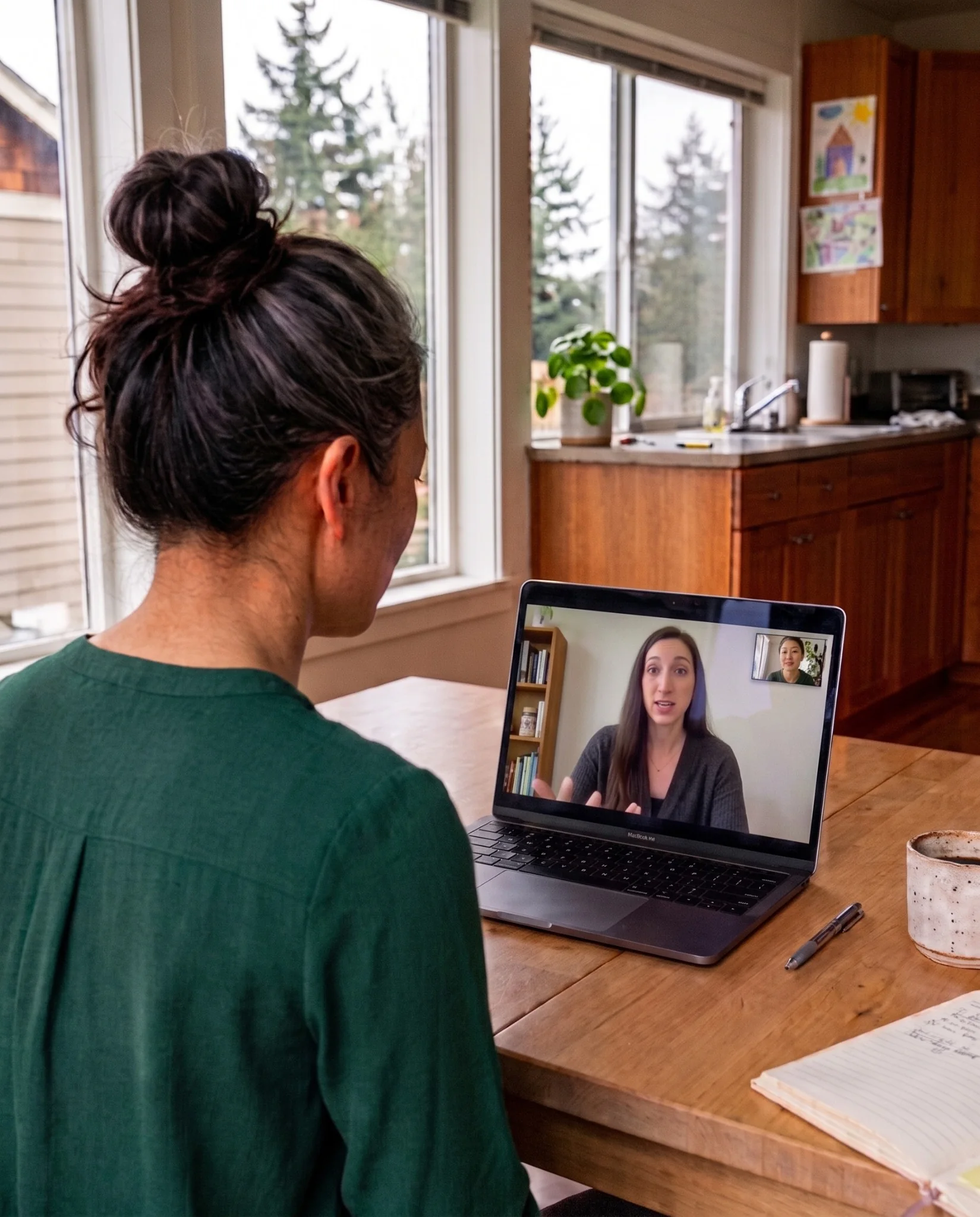
We offer online psychotherapy with registered therapists who help you prepare for a psilocybin experience and integrate what follows. You work with the same therapist before and after, building a relationship that can continue for as long as you feel it’s needed.
$175 per session. No fixed package. Free 20-minute consultation.
Book a free 20-minute consultationPreparation
Preparation: the work starts before the experience.
Preparation may sound fairly simple.
Set an intention. Know what to expect. Make sure you have the set and setting.
But there’s a much bigger opportunity.
The psychological work can begin weeks before an experience, and much of it can be valuable whether you eventually decide to proceed or not.
Start with your intention.
You might arrive saying you want to drink less. As you explore that with your therapist, you begin to understand what drinking has actually been doing for you. What it quiets down at nine in the evening. What feelings or situations you find yourself trying to escape.
That gives you something much more meaningful to work with.
Or perhaps you want to feel less anxious. Over a few conversations, you start noticing how much of your life revolves around anticipating other people’s needs, or how difficult it has become to trust your own decisions.
Sometimes preparation changes the question itself.
You can understand a pattern for years and still feel caught inside it. Spending time with it before a psychedelic experience can help you become clearer about what you’re bringing with you and what you genuinely want to explore.
Preparation also gives you somewhere to examine your expectations.
If you’ve read enough accounts of profound experiences, it’s easy to develop a picture of what your own experience is supposed to be.
What are you hoping will change?
How much are you asking this experience to resolve?
What would it be like to approach it with curiosity rather than a script?
And then there are the practical psychological tools.
Good preparation can help create the conditions for a more grounded, supported experience. You can learn to recognize when anxiety is building, practise ways of grounding yourself, become more comfortable staying with an emotion instead of immediately pushing it away, and get better at asking for support when you need it.
You can’t script the experience. But you can influence how you arrive.
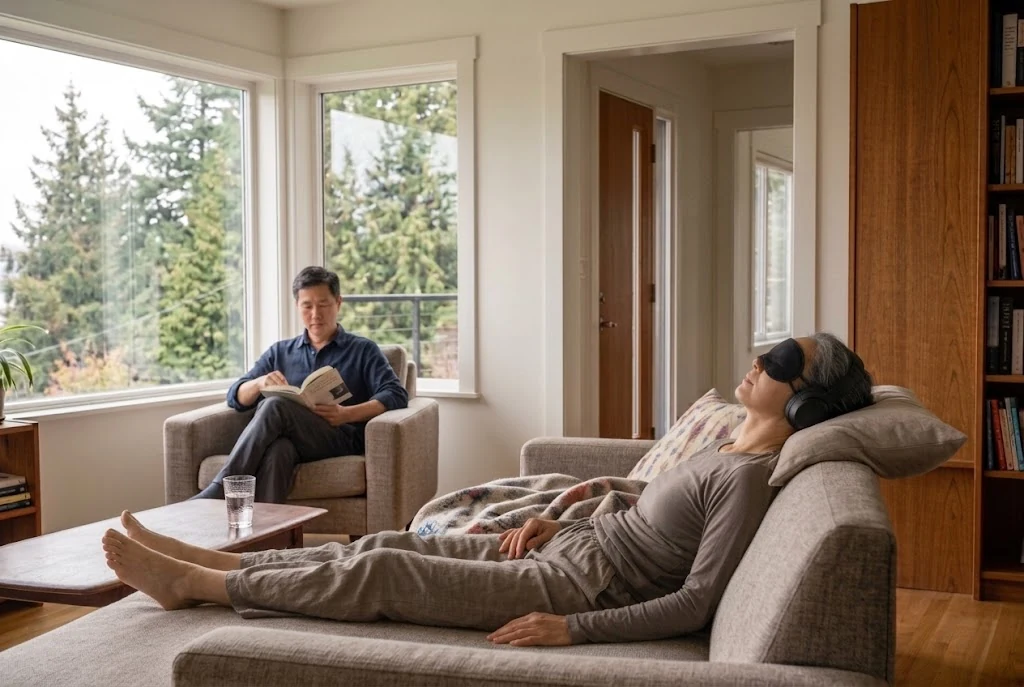
Your therapist can help you identify someone you trust to be present during your psychedelic experience, talk through what makes a good trip sitter, and invite them to join a preparation session so everyone is clear on your needs, boundaries and the kind of support you want.
By the time the experience arrives, you can have clearer intentions, a better understanding of what you’re carrying into it and some tools you’ve already had a chance to practise.
And sometimes the preparation itself is enough to change the direction of the work. You may decide the timing isn’t right. You may decide not to proceed.
The work you’ve already done still belongs to you.
Research
Why are so many people interested in psilocybin?
Researchers have been studying psilocybin for depression, alcohol use and its ability to occasion experiences people describe as deeply meaningful.
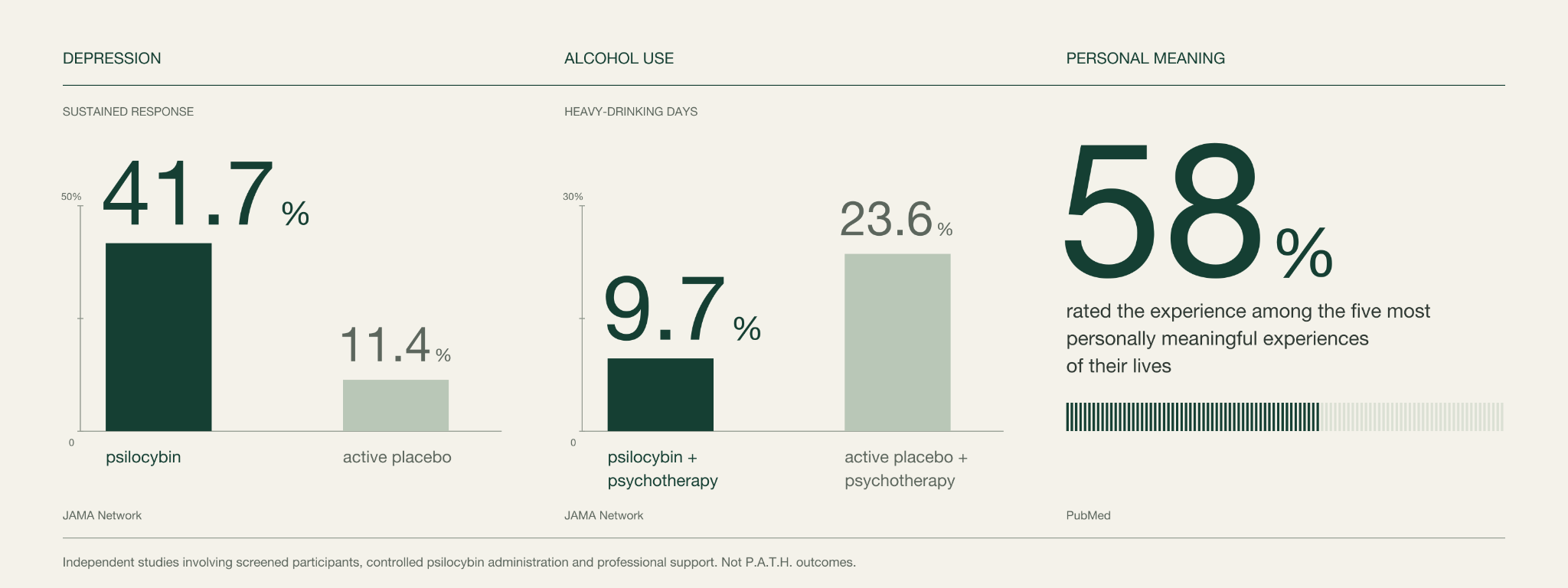
Depression, sustained response: in a 2023 randomized trial, 41.7% of participants receiving psilocybin had a sustained response in depressive symptoms, compared with 11.4% receiving an active placebo.
Alcohol use, heavy-drinking days: in a randomized trial of adults with alcohol use disorder, people receiving psilocybin alongside psychotherapy had heavy-drinking days on 9.7% of days, compared with 23.6% for those receiving an active placebo alongside psychotherapy.
Personal meaning: at a 14-month follow-up, 58% of participants in a Johns Hopkins study rated their psilocybin experience among the five most personally meaningful experiences of their lives.
Sources: JAMA (depression), JAMA Psychiatry (alcohol use), PubMed (personal meaning).
Integration
Everyone talks about the journey. Almost nobody helps with the landing.
Something happens, and then Monday happens.
Most of us have well-worn ways of seeing ourselves, other people and the problems in our lives. We can understand a pattern for years and still find ourselves travelling down the same path.
One of the remarkable things researchers are learning about psilocybin is that, for a period of time, those familiar patterns can become less rigid. The brain’s usual ways of organizing experience are disrupted, and there can be more flexibility in how we think, feel and see ourselves.
Something that has always looked one way can suddenly look different.
You might come away seeing someone you love differently, and wanting to tell them something you’ve never quite managed to say.
You might feel compassion toward yourself that has been difficult to access for years.
Or you might see an old pattern, something you’ve understood intellectually for a long time, from an entirely different angle.
That new perspective is part of what can make a psilocybin experience so meaningful.
Then ordinary life resumes.
The inbox is the same inbox. The self-criticism can find its way back. You understand the pattern, and then it appears in the middle of a Tuesday argument and you respond the way you always have.
A different perspective can be powerful. Living differently because of it takes practice.
That’s where integration comes in.
Integration therapy gives you somewhere to work with that opening while it still matters to you. To ask what you want to carry forward and what, if anything, you want to begin doing differently.
Maybe there’s something you want to say to someone you love.
Maybe there’s a habit you’re ready to approach differently.
Maybe you experienced a way of relating to yourself that you’d like to make more familiar.
The experience can show you another path. Integration is where you begin walking it.
You do that work with the same P.A.T.H. therapist who helped you prepare.
They already know what was happening in your life before the experience, what you were hoping for and what you had begun exploring together. You don’t have to start your story again.
You pick up the thread and keep going.

Working with P.A.T.H.
Psychotherapy that fits into the life you already have.
Psychedelic retreats can be valuable for some people. They can also cost thousands of dollars, before travel and time away from work are considered.
P.A.T.H. offers a different service.
Individual preparation and integration psychotherapy, online, with a therapist you can continue seeing when you’re back at work, back with your family and living the life where the work actually matters.
There’s no residential program and no fixed package of sessions.
- Free 20-minute consultation
- No fixed package
- Same therapist before and after
- Online across Canada
You choose a registered therapist who practises in your province.
If you continue after your experience, the relationship is already there. You can keep working on what has emerged rather than starting again with somebody new or trying to fit integration into a predetermined number of appointments.
P.A.T.H. provides detailed receipts for extended health benefits. Reimbursement depends on your individual plan and your therapist’s professional designation.
Your $175 fee is for psychotherapy. The psychedelic experience itself is independently arranged. P.A.T.H. does not administer psilocybin or supervise the experience.
How to begin
Choose your therapist
Find a registered therapist who practises in your province and whose approach feels right for you.
Have a free conversation
Book a free 20-minute consultation. Talk about what has brought you here, what you’re considering and any questions you have.
There is no commitment to proceed with psilocybin.
Begin the work
If you decide to continue, you and your therapist can begin preparation together.
After your experience, you return to the same person for integration and, when useful, ongoing psychotherapy.
A few things you may be wondering
Do I need to have decided to use psilocybin before I book?
No. You can begin by talking through why you’re considering it, what you hope for and what questions you have. Some people decide to proceed and others don’t. Either way, the therapeutic work can still be useful.
Can I come to P.A.T.H. if I’ve already had a psilocybin experience?
Yes. You don’t need to have prepared with P.A.T.H. to begin integration therapy. A consultation is a good place to start.
What if I take prescription medication?
If you take prescription medication, check with the clinician who prescribes it before a psilocybin experience. A pharmacist can also help answer questions about possible drug interactions.
Don’t stop or change prescribed medication on your own.
What kind of support should I have during an experience?
Your therapist can help you think through the people you trust and the support available to you. That can include discussing a sober support person who can be present, what their role should be and what would help you feel comfortable and supported.
P.A.T.H. itself provides psychotherapy before and after the experience rather than supervision during it.
Will extended health benefits cover my sessions?
We provide detailed receipts. Whether sessions are reimbursed depends on your benefits plan and your therapist’s professional designation, so check your individual coverage.
Start with a conversation.
You don’t need to arrive with everything figured out.
Choose a therapist who practises in your province and book a free 20-minute consultation.
Book your free 20-minute consultation
Your path to clarity, connection, and profound transformation.